
Heinze ArchitekturAWARD 2026: Teilnehmer
Timber Stitch
Diese Objektpräsentation wurde angelegt von: Technische Universität Berlin, Janis Wegner
Basisdaten zum Objekt
Lage des Objektes
Vereinigte Staaten von Amerika
Objektkategorie
Objektart
Art der Baumaßnahme
Entwurfskonzept
Fertigstellungstermin
06.2026
Zeichnungen und Unterlagen
Gebäudedaten
Bauweise
Holzbau
Tragwerkskonstruktion
Holz
Anzahl der Vollgeschosse
3- bis 5-geschossig
Raummaße und Flächen
Bruttogrundfläche
865 m²
Wohnfläche
650 m²
Beschreibung
Objektbeschreibung
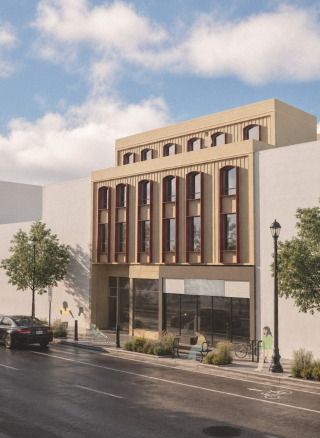
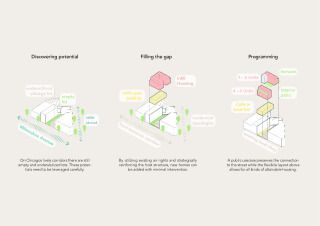
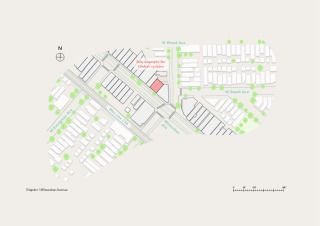
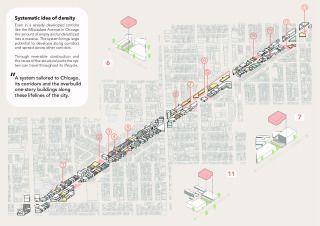
The project addresses untapped housing resources by increasing density while preserving cultural richness and local businesses that survive amidst redevelopment pressure. Rather than relying on demolition and replacement, the project introduces an incremental strategy that combines a vacant lot with its adjacent low-rise to create attainable missing-middle housing.
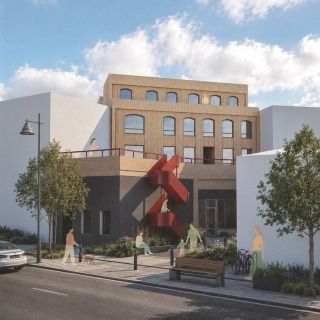
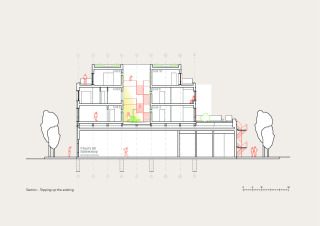
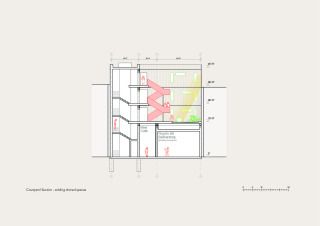
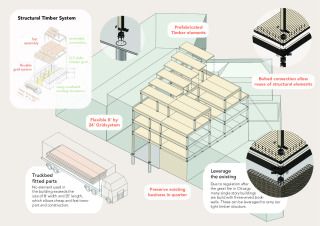
The vacant parcel becomes the primary point of intervention, accommodating circulation, services, and public ground-floor program that activates the street. Above, lightweight modular timber housing extends across both properties, utilizing air rights of the neighboring building. Leveraging Chicago’s tradition of overbuilt masonry construction, new steel transfer elements work together with existing brick walls to support additional housing while allowing businesses to remain operational throughout development.
The housing system is based on standardized mass timber components sized for conventional transportation and rapid assembly. CLT floor panels, glulam structural elements, and prefabricated envelope systems reduce construction time, lower embodied carbon, and minimize disruption to surrounding communities. A simple structural grid enables multiple unit configurations, creating a diverse community while remaining adaptable to changing needs.
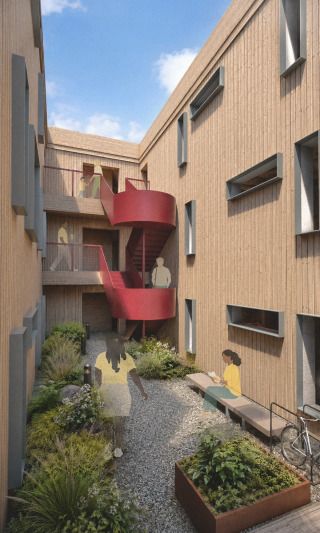
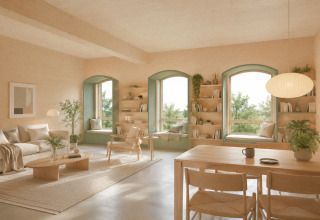
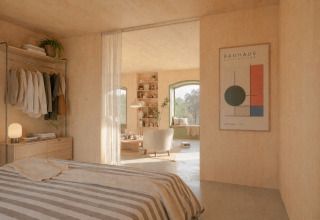
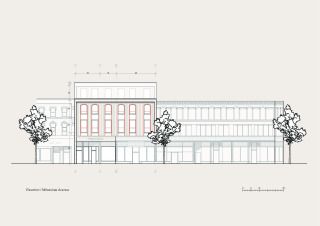
A shared courtyard introduces daylight, cross-ventilation, and collective outdoor space, while a community roof terrace connects residents to public uses below. The façade reinterprets the rhythm of Chicago’s historic commercial corridors through a contemporary composition of wood and metal-framed openings. Deep window reveals become inhabitable seating niches, integrating the architecture of the façade into the interior experience.
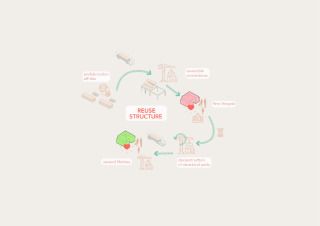
Designed for disassembly and future reuse, Timber Stitch demonstrates how circular construction, incremental density, and community preservation work together to create a resilient urban future.
Program Summary:
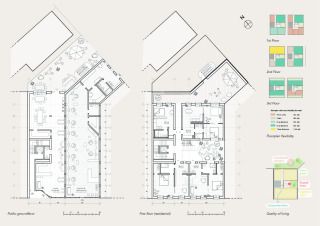
Timber Stitch combines public and residential programs within a modular mass timber infill system. The ground floor accommodates a publicly accessible commercial space and the primary circulation core located on the vacant lot. Above, three residential levels provide a mix of adaptable unit types, including studios, one-bedroom apartments, family units, and live-work configurations. The sizes given in the competition brief could be achieved nearly exactly through the adaptive grid layout with two housing sides. On all stories the unit types can be similar or mixed.
Housing is organized around a shared courtyard that introduces daylight, natural ventilation, and visual connections across the building. A community roof terrace extends the collective outdoor space and creates a transition between residents and the surrounding neighborhood. The modular structural grid allows units to be reconfigured over time while maintaining efficient construction and operation.
Beschreibung der Besonderheiten
Nachhaltigkeit
The project proposes a circular mass-timber infill system that transforms underutilized sites along Chicago’s commercial corridors into attainable housing. Prefabricated timber modules reduce material consumption, construction waste, and on-site disruption while enabling rapid deployment across diverse urban conditions. Rather than creating fixed buildings, the system is conceived as a long-term urban resource. Housing units can be assembled, expanded, relocated, and reused as neighborhood needs evolve, extending the life of both materials and buildings. By combining renewable timber construction with adaptable urban infill, the proposal establishes a replicable framework for incremental growth that strengthens existing communities without displacing local businesses.
Energy & Wellbeing
Passive environmental strategies shape the living experience. Generous daylight, natural ventilation, shared outdoor spaces, and exposed timber interiors reduce energy demand while creating healthy and comfortable homes. The biophilic qualities of wood, combined with compact and efficient layouts, support occupant wellbeing and foster a stronger connection between residents, community, and nature.
Objekte in der Umgebung
Ähnliche Objekte
